What is with the ahistorical writing of the post-WWI generation? They synthesize all the violence of their experience into a narrative without ever actually naming the source of the tension. This is the case in Hemingway, Fitzgerald, and now Jean Rhys. (Not "now," really. but I did just read her.)
The Post-WWII generation was not so dismissive. Not to say that the previous generation was dismissive, but they were struck somewhat silent about the specifics. Shock. Is that the kind of shock that Walter Benjamin was talking about? I did not understand that bit. Post WWII, they were shocked, but there seemed to be two responding alternatives. One, the reversion to a narrative of fallen enemy vs. victorious righteous ones. Not necessarily a simplification of the experience, but a making-palatable. Two, the testimony of horror. In this case, they were not stricken silent, but rather compelled to give some kind of witness. Weisel and Levi are examples of this.
Not that I'm studying post-WWII literature. Back to Marx, girl. Back to Lukacs and Adorno.
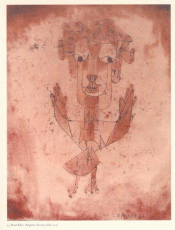
Here are my thoughts on this one. Marx, or at least the Marxist theorists and critics that I have read so far, seem to be depicting a secular religion or faith narrative that ignores the absence or existence of God (which is why they don't call themselves a faith, and why they don't refer to their theories and philosophies as theology). However, it is a very clear faith narrative, and a Judeo-Christian one at that. We have fallen humanity, constantly and perpetually regressing into a reified state of objectification, consumerism, destructive-'progressive' capitalism, etc. As (apparently) Habermas implies, it is not so much a recent problem--the result of Lockian property notions gone Ameriworld--as it is an inherent human flaw (like... sinful nature?). After a certain time, we have our prophets, or singular prophet, who declares this problem to the world and calls for transformation. Something like Scripture, a Moses-Isaiah-one calling out in the desert, prepare the way for the... revolution. This, of course, would be Marx. One might compare all of his disciples to the Christian New Testament writers, noting, of course, the absence of Christ in the Marxian formula. This does not mean, however, that there is an absence of Messiah. Check out Walter Benjamin. He's full of messianic notions. And more than that, in Benjamin we have the iconographers. For the Marxist aesthetic is surrealism (according to the afformentioned Ben), representing all the complicated notions of object, image, meaning, and more. It is interesting to note that Benjamin himself had quite a thing for Paul Klee's Angelus Novus. A meditative fascination with the divine being in image. But back to the Messiah. It is not Walter alone who has this notion of a hoped-for future. The whole crew of Marxists everywhere speak of this hope for transformation through revolution. The revolution takes different forms; the transformation has different causes, but the hope is the same. (Granted, it is also, as far as I can tell, rather ill-defined. For a godless notion of the Coming Kingdom must be wary of hoping for anything in particular, lest that particular be only another broken product of the broken system.)
(I must add, the novelist of the Marxists are far more talented than the novelists of the Christians. Not that this has anything to do with anything. But there's just no comparison between Jean Rhys and Francine Rivers. Come on.)
but francine rivers is not really RELALY Christian lit..... let's discuss Oconnor, lewis, or a plethora of others ....
ReplyDeletethank you for that distinction. i should not have been so hasty in my blanket statements. Yes, O'Connor, or Percy, or Lewis, or Williams. forgive me.
ReplyDeleteuh,yeah
ReplyDelete???